
What is a Legionella Risk Assessment?
A Legionella Risk Assessment is a structured evaluation of a water system to identify potential risks associated with Legionella bacteria and determine the measures required to control those risks.
It is a key requirement under UK health and safety legislation, including ACoP L8 and HSG274, and applies to any premises where water is stored, used, or circulated.
The purpose of the assessment is to ensure that water systems do not create conditions where Legionella bacteria can grow and pose a risk to health.
What Does a Legionella Risk Assessment Involve?
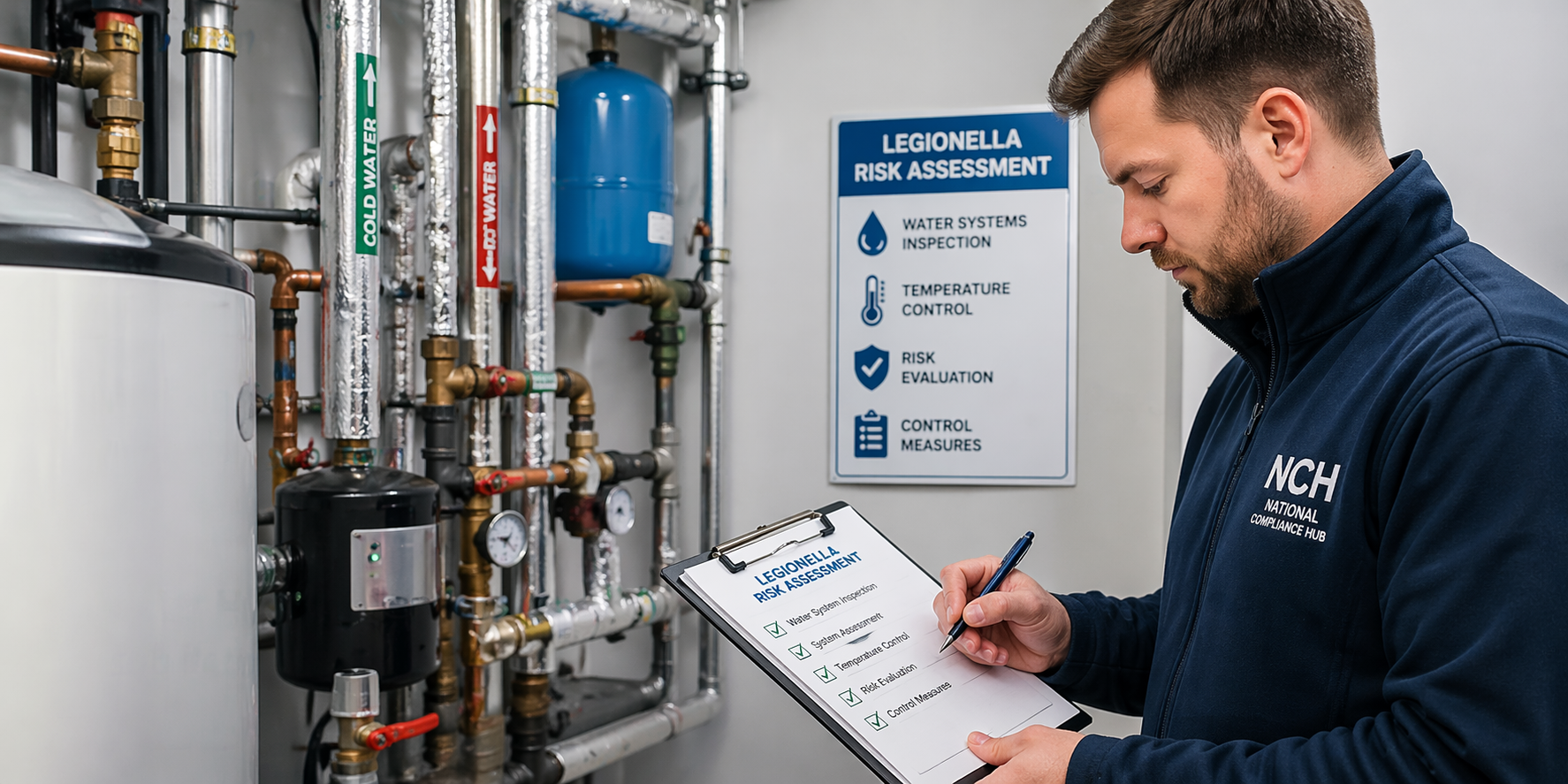
A Legionella Risk Assessment typically includes:
- Inspection of water systems, including tanks, pipework, and outlets
- Identification of areas where water may stagnate
- Review of system design and condition
- Assessment of temperature control and water usage
- Identification of potential sources of contamination
The findings are documented in a report, along with recommendations for managing and reducing risk.
Why is a Legionella Risk Assessment Important?
Legionella bacteria can cause Legionnaires’ disease, a potentially serious form of pneumonia.
A risk assessment helps to:
- Identify potential hazards within the system
- Ensure appropriate control measures are in place
- Demonstrate compliance with legal requirements
- Protect the health of building occupants
Without a proper assessment, risks may go unnoticed, increasing the likelihood of Legionella growth.
Who Needs a Legionella Risk Assessment?
A Legionella Risk Assessment is required for:
- Employers and businesses
- Landlords and letting agents
- Facilities managers
- Duty holders responsible for premises
Any organisation or individual responsible for a water system must ensure that risks are assessed and managed appropriately.
How Often Should a Legionella Risk Assessment Be Carried Out?
A Legionella Risk Assessment is not a one-time task.
It should be:
- Reviewed regularly (typically every 2 years)
- Updated when there are changes to the system
- Reassessed if there are concerns about water quality or control measures
You can read more in our guide on how often a Legionella Risk Assessment should be carried out.
What Happens After the Assessment?
Following the assessment, a report is provided outlining:
- Identified risks
- Required remedial actions
- Recommended control measures
From this, a Written Scheme of Control may be developed to manage ongoing risk.
Do You Need a Professional Assessment?
While some simple systems can be assessed internally, many organisations choose to use a professional service.
A professional Legionella Risk Assessment ensures:
- A thorough and structured inspection
- Clear, compliant documentation
- Practical and actionable recommendations
- Confidence that risks are properly managed
Conclusion
A Legionella Risk Assessment is a fundamental part of managing water safety and ensuring compliance with ACoP L8. By identifying and controlling risks, it helps protect people and ensures that water systems remain safe to use.
Need a Legionella Risk Assessment?
If you’re unsure whether your system is compliant, we can help.
Book a Free Compliance Review